Source: https://blog-en.theplanetarysystem.org/2024/11/07/the-law-of-repulse/
On a day qualified, at the level of the Causal Impulses, by the heliocentric conjunction between Pluto (First Ray of Will and Power) and Mercury (Fourth Ray of Harmony through conflict) in Aquarius, let us celebrate the Law of Repulse, associated with the 1st Ray, the 4th among the seven laws of soul or group life that reveal to us how to powerfully and purposefully serve, as Group Consciousness, the demands of the Plan of Evolution.
(Excerpts from A. A. Bailey, Esoteric Psychology II, pp. 147-174):
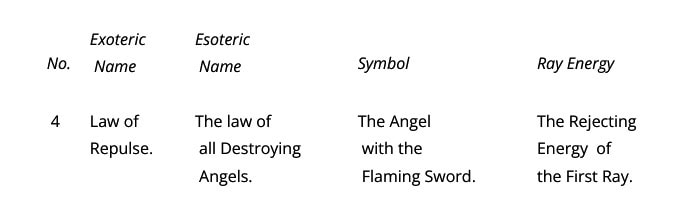
“We have here a most interesting law to consider. It is one of the major divine laws with which the Pilgrim has much to do on his weary, age-long way, back to the centre. It is the fourth law governing or controlling the life of the soul.
First of all, it is well to realise that this law has certain characteristics and basic effects which might be briefly enumerated as follows:—
1. The energy displayed is dissipating in its effect. This law works as a dispersing agent.
2. When in active expression, it causes an active scattering or rejection of the aspects of form life.
3. It produces a discriminating contact which leads eventually to what is esoterically called “the Way of divine refusal”.
4. It is, nevertheless, an aspect of the Law of Love, of the Vishnu or Christ aspect, and concerns an attitude of the soul, whose essential nature is love.
5. This law expresses itself through the mind nature, and therefore can only make its presence and influence felt upon the Path of Discipleship.
6. It is the prime pre-requisite to true self-knowledge. It reveals at the same time that it divides or scatters.
7. It works through love and for the interest of the [single] unit,—the form and the existence which finally repulses the form.
8. It is an aspect of one of the greatest cosmic laws, the Law of the Soul, which is the cosmic Law of Attraction, for that which is attracted in time is automatically and eventually repulsed by that which attracted it in the first instance.
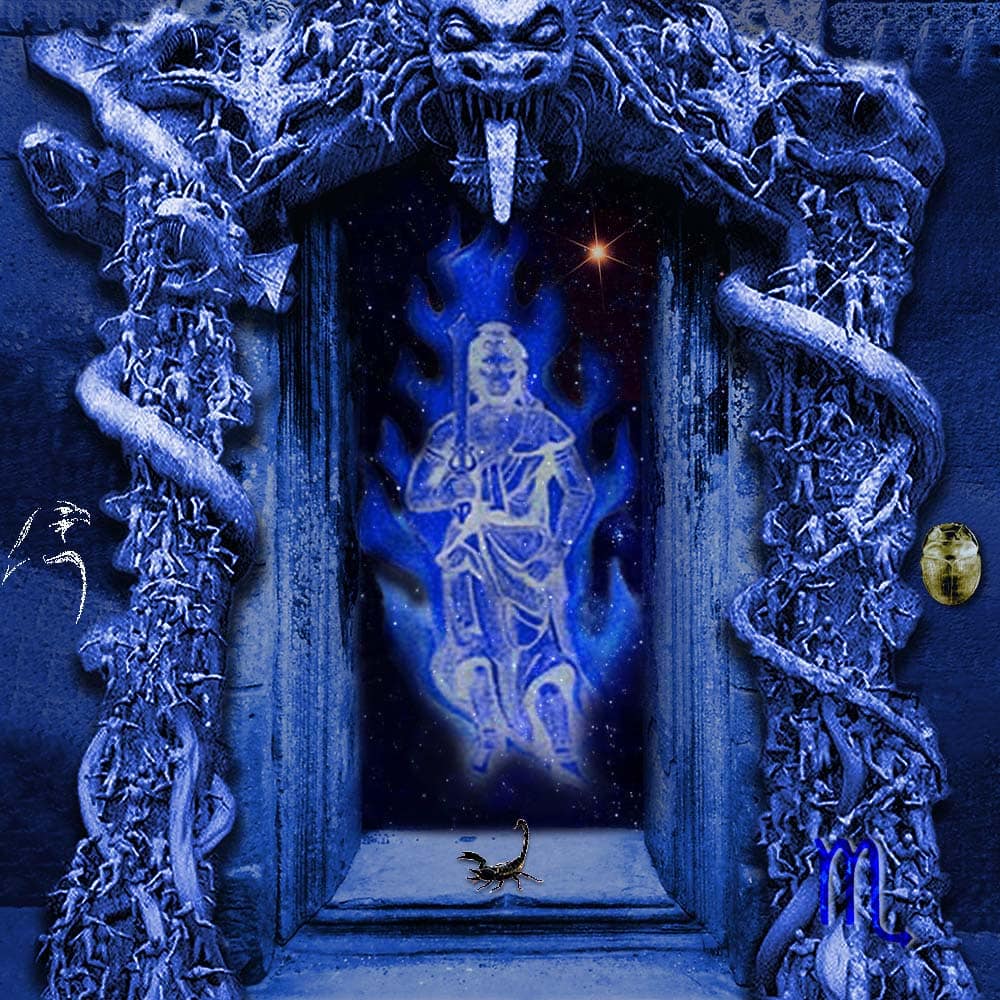
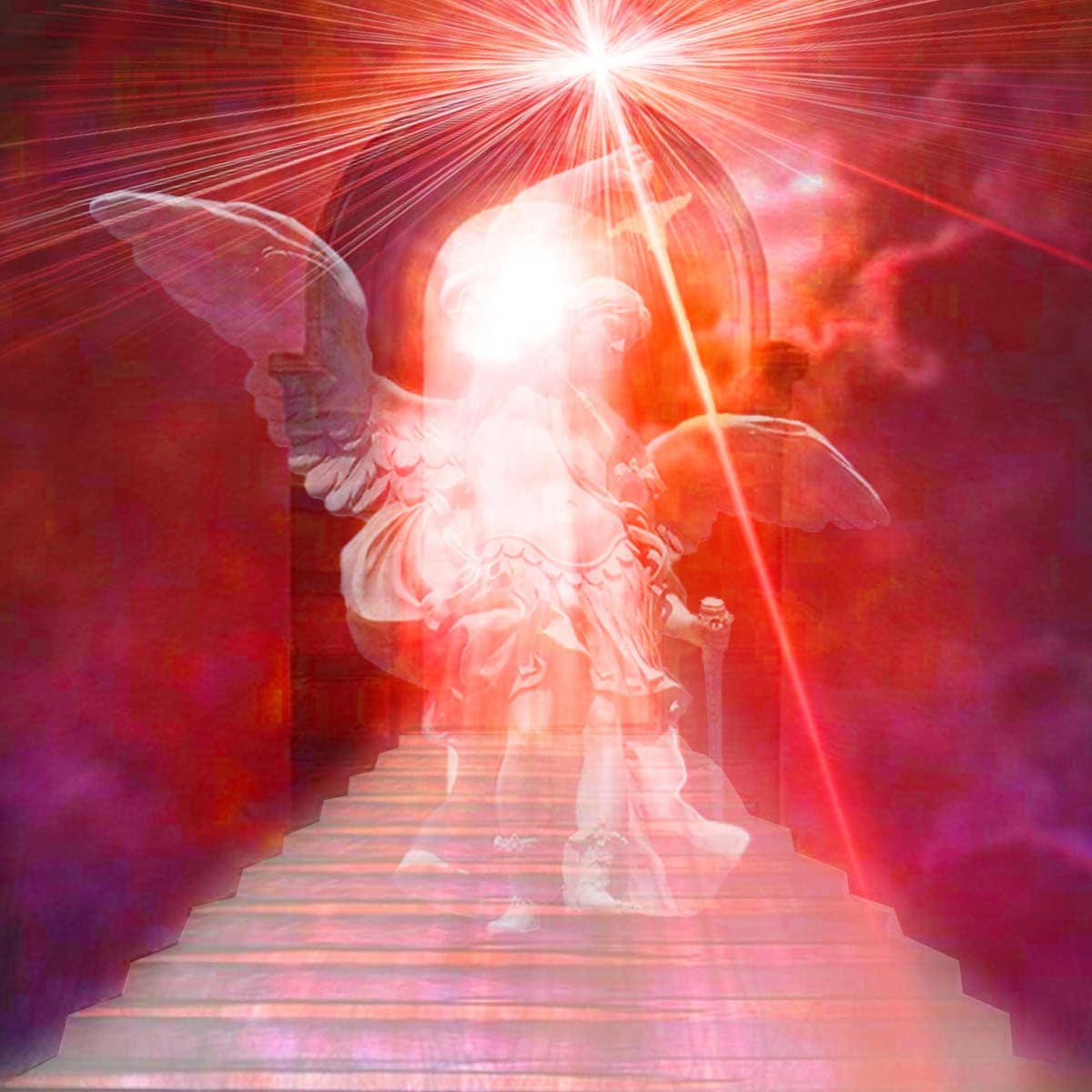
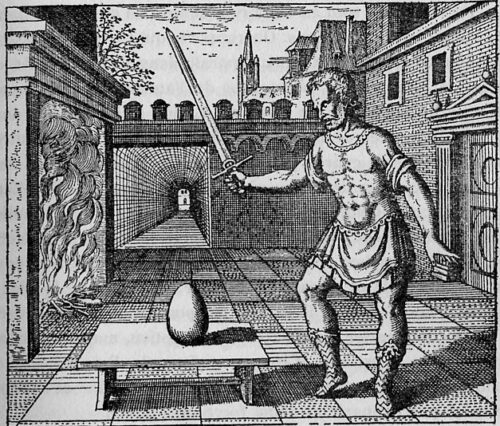
This law is one which primarily begins to impress the divine purpose upon the consciousness of the aspirant, and dictates to him those higher impulses and those spiritual decisions which mark his progress upon the Path. It is the demonstration of the first ray quality (a subray influence of the second ray), for it should be remembered that to repulse a form, a situation or a condition may be the evidence of spiritual love in the agent of repulsion. This is well pictured for us in the ancient symbol of the Angel with the flaming sword, who stands before the gate of Paradise to turn away those who seek the fancied security of that shelter and condition. This angel acts in love, and has so acted down the ages, for that state of realisation which we call Paradise is a place of essential danger for all, save those who have earned the right to sojourn there. The angel protects the unready aspirant (not the place which he seeks to enter) and safeguards him from the risks and perils of that initiation which must be undergone before he can pass through the five divisions of Paradise to the place where light dwells and the Masters of the Wisdom live and work. This is the thought which lies behind the Masonic procedure whereby the Tyler stands outside the door of the Lodge with a drawn sword to protect the secrets of the Craft from the unready.
I would remind you also that as this law is an aspect of the fundamental Law of Love, it concerns the psyche or soul, and therefore its function is to further the spiritual interests of the true man, and to demonstrate the power of the second aspect, the Christ consciousness, and the power of divinity.
It “rejects the undesirable in order to find that which the heart craves, and thus leads the weary pilgrim from one rejection to another, until with unerring choice he makes the Great Decision”. This is quoted from the Old Commentary.
We will divide what we have to say about the functioning and effect of the Law of Repulse into three parts:—
- The Law of Repulse, and the function and quality of desire.
- The Law of Repulse, as it expresses itself upon the Paths of Discipleship and Initiation.
- The Law of Repulse, as it “drives in seven directions, and forces all that it contacts back unto the bosom of the seven spiritual Fathers”.
This law works through the soul in all forms. It does not literally affect matter, except in so far as form is affected when the soul “withdraws”, or occultly “repudiates”. It will be apparent, therefore, that our understanding of its activity will depend largely upon the measure of soul force of which we may individually be aware, and the extent of our soul contact… Unless the mind is active, and unless we are beginning intelligently to use the mind, there is no medium or channel through which this influence can flow or work. Never let it be forgotten that this influence or law of our spiritual being is that which reveals the will, plan or purpose of the divine life, as it expresses itself in the individual or in humanity as a whole.
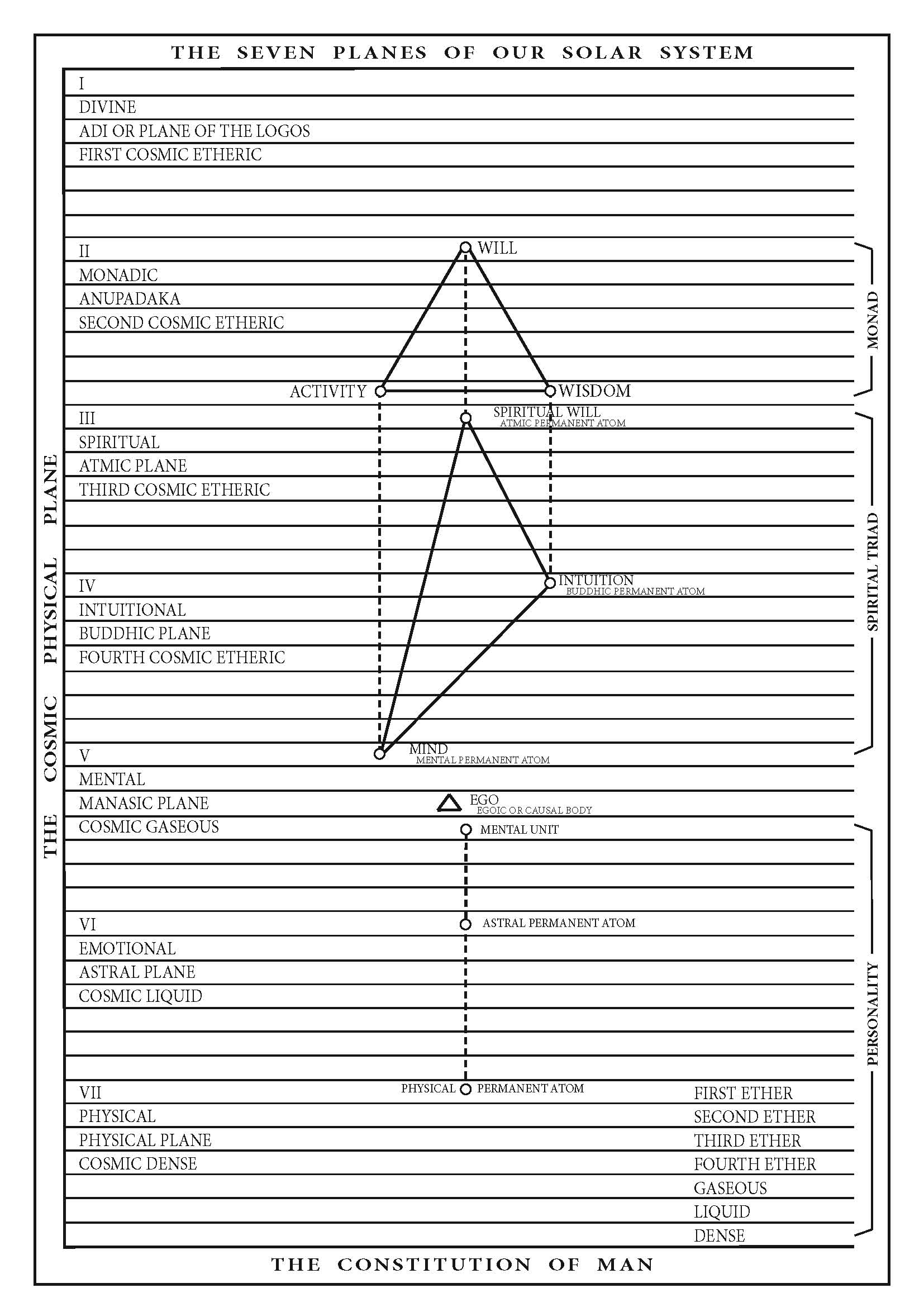
… These laws are the laws which govern predominantly the Spiritual Triad, that divine Triplicity which expresses itself through the medium of the soul, just as the three aspects of the soul, in their turn, reflect themselves through the personality… This fourth Law of Repulse works through the first Law of Sacrifice and carries to the aspirant the quality, influence and tendency of the Spiritual Triad, the threefold expression of the Monad. Its full force is felt only after the third initiation, in which the power of the Spirit is, for the first time, consciously felt. Up to that time it has been the growing control of the soul which was primarily registered. …
- THE LAW OF REPULSE AND DESIRE
The section with which we have now to deal will concern itself specifically with the major problem of humanity… Underlying the entire psychological problem of humanity as a whole lies that major attitude towards existence which we characterise as Desire. All lesser complexities are based upon, subservient to, or are emergent from, this basic urge. Freud calls this urge “sex”, which is, nevertheless, only another name for the impetus of attraction for the not-self…
Everything is governed by some form of urgency towards satisfaction, and this is distinctive of man’s search at every stage of his development—whether it is the instinctual urge to self-preservation, which can be seen in the savage’s search for food or in the economic problems of the modern civilised man; whether it is the urge to self-reproduction and the satisfaction of that appetite which works out today in the complexity of the sex life of the race; whether it is the urge to be popular, loved and esteemed; whether it is the urge for intellectual enjoyment and the mental appropriation of truth, or the deep-seated desire for heaven and rest which characterises the Christian, or the aspiration for illumination which is the demand of the mystic, or the longing for identification with reality which is the “wish” of the occultist. All this is desire in some form or another, and by these urges humanity is governed and controlled; I would say most definitely controlled, for this is only a simple statement of the case.
It is this realisation of man’s fundamental bias or controlling factor that lies behind the teaching given by the Buddha, and which is embodied in the Four Noble Truths of the Buddhist philosophy, which can be summarised as follows:—
The Four Noble Truths
- Existence in the phenomenal universe is inseparable from suffering and sorrow.
- The cause of suffering is desire for existence in the phenomenal universe.
- The cessation of suffering is attained by eradicating desire for phenomenal existence.
- The Path to the cessation of suffering is the noble eightfold path.

It was the realisation of the urgency of man’s need to be delivered from his own desire-nature which led Christ to emphasise the necessity to seek the good of one’s neighbor in contra-distinction to one’s own good, and to advise the life of service and self-sacrifice, of self-forgetfulness and love of all beings. Only in this way can man’s mind and “the eye of the heart” be turned away from one’s own needs and satisfaction to the deeper demands of the race itself.
Until a man stands upon the Path of Perfection, he cannot really grasp the imperative demand of his own soul for release from the search for outer, material, tangible satisfaction, and from desire. It has been this demand which indicated the soul’s need to incarnate and to function, for a needed period, under the Law of Rebirth. As the work of purification proceeds upon the Path of Purification, this demand for release becomes stronger and clearer, and when the man steps out upon the Path of Discipleship, then the Law of Repulse can, for the first time, begin to control his reactions. This takes place unconsciously at first, but it becomes more potent and more consciously appreciated as the disciple takes one initiation after another, with increasingly pointed understanding.
It is not our intention in this Treatise to deal with the development of the unevolved and undeveloped man in connection with these Laws of the Soul. I seek only to clear the way of the highly intelligent man, the aspirants of the world and the world disciples. The progress of the undeveloped and the average man can be covered by the following statements, taken sequentially and describing the stages of his progress under the promptings of desire:
1. The urge to experience, to exist, and to satisfy the instinctual nature.
2. Experience, grasping, existing, followed by renewed demand for more satisfying compliances of fate or destiny.
3. Cycle after cycle of demand for satisfaction, a period of satisfaction of a temporary nature, and then further demands. This is the story of the race.
4. Experience, steadily sought and pursued upon the three planes of human evolution.
5. Then the same experience, but this time as an integrated personality.
6. Demand met until satiety is reached, for in time all men do eventually achieve that which they demand.
7. Then comes the demand for inner spiritual compliances, happiness and bliss. The “heaven wish” becomes powerful.
8. A vague realisation that two things are needed; purification and the power to choose aright, which is right discrimination.
9. A vision of the pairs of opposites.
10. The realisation of the narrow path which leads between these pairs of opposites.
11. Discipleship and the repulsing or repudiation (over a long period of time), of the not-self.

Such, briefly and inadequately stated, is the story of man as he searches for happiness, for joy and for bliss, or (expressing it in terms of realisation) as he progresses from the life of the instincts to that of the intellect, and then from that intellectual apprehension to the stage of illumination and final identification with reality, when he is henceforth freed from the Great Illusion.
Two things determine the rapidity with which he can—upon the Path of Discipleship—bring the Law of Repulse into play. One is the quality of his motive. Only the desire to serve is adequate to bring about the necessary reorientation and subjection to the new technique of living. The other is his willingness, at all costs, to be obedient to the light which is in him and around him. Service and obedience are the great methods of release, and constitute the underlying causes which will bring the Law of Repulse into play, thus aiding the aspirant to attain the longed-for liberation. Service releases him from his own thought life and self-determination.
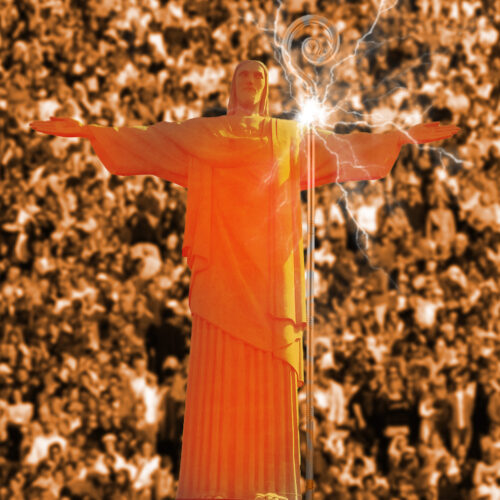
Obedience to his own soul integrates him into the larger whole, wherein his own desires and urges are negated in the interest of the wider life of humanity and of God Himself. God is the Great Server and expresses His divine life through the Love of His heart for humanity.
Yet, when these simple truths are enunciated and we are urged to serve our brother and to obey our soul, it seems to us so familiar and so uninteresting that it can evoke but little response. If we were told that the following of a prescribed form of meditation, the practicing of a definite formula of breathing, and regular concentration upon a specific centre would release us from the wheel of life and identify us with the spiritual self and its world of being, gladly and willingly and joyously would we follow out instructions. But when, in the terms of the occult science, we are told to serve and obey, we are not interested. Yet service is the mode, par excellence, for awakening the heart centre, and obedience is equally potent in evoking the response of the two head centres to the impact of soul force, and unifying them into one field of soul recognition. So little do men understand the potency of their urges! If the urge to satisfy desire is the basic urge of the form life of man, the urge to serve is an equally basic urge of the soul in man. This is one of the most important statements in this section. It is as yet seldom satisfied. Indications of its presence are ever to be found, nevertheless, even in the most undesirable types of human beings; it is evolved in moments of high destiny or immediate urgency, and of supreme difficulty. The heart of man is sound, but oft asleep.

Serve and obey! These are the watchwords of the disciple’s life. They have been distorted into terms of fanatical propaganda and have thus produced the formulas of philosophy and of religious theology; but these formulas do, at the same time, veil a truth.
They have been presented to the consideration of man in terms of personality devotions and of obedience to Masters and leaders, instead of service of, and obedience to, the soul in all. The truth is, however, steadily emerging, and must inevitably triumph. Once the aspirant upon the Probationary Path has a vision of this (no matter how slight it may be), then the law of desire which has governed him for ages will slowly and surely give place to the Law of Repulse, which will, in time, free him from the thralldom of not-self. It will lead him to those discriminations and that dispassionate attitude which is the hallmark of the man who is on his way to liberation. Let us remember, however, that a discrimination which is based upon a determination to be free, and a dispassion which is the indication of a hard heart, will land the aspirant in the prison of a crystallized shell, which is far harder to break than the normal prison of the life of the average selfish man. This selfish spiritual desire is oft the major sin of so-called esotericists and must be carefully avoided. Therefore, he who is wise will apply himself to serve and obey.
- THE LAW OF REPULSE UPON THE PATHS OF DISCIPLESHIP AND INITIATION
When the discriminating sense (the spiritual correspondence of the sense of smell, the last of the five senses to emerge in humanity) has been adequately developed in the aspirant, and he knows the pairs of opposites and has gained a vision of that which is neither of them, then he can pass on to the Path of Discipleship and enter upon the arduous task of cooperating with the spiritual laws, particularly with the Law of Repulse. At first, he hardly recognises the influence of this Law… He has to learn to recognise its influence; then he must himself learn to do three things:—
1. Through service, steadily to decentralise himself and thus begin occultly to “repulse” the personality. He must see to it that his motive is love for all beings, and not desire for his own release.
2. Through an understanding of the pairs of opposites, he begins, esoterically, to “isolate” the “noble middle path” of which the Buddha spoke.
3. Through comprehension of the words of Christ, enjoining men to “let their light shine”, he begins to construct the “path of light” which leads to the centre of life and guides him out of darkness into light, from the unreal to the real, and from death to immortality. This is the true path of the antaskarana, which the disciple weaves from out of himself (speaking symbolically), just as the spider weaves his thread.
Service, an understanding of the Way, and the building of the true line of escape—that is the task to be carried forward upon the Path of Discipleship.
Such is the object set before all the students of the esoteric sciences at this time,—provided they desire it enough, and can train themselves to work selflessly for their fellow men. As they succeed in doing this and approximate ever more closely to that which is not the pairs of opposites (and thus achieve “the Central Way”), steadily the Law of Repulse begins to swing into operation. When the third initiation is taken, this law will begin to hold the dominant place in the ruling of the life.

… Yet, spiritually considered and scientifically viewed, the word “repulse” indicates simply “an attitude towards that which is not desirable”. This, in its turn (as we seek to determine that which is desirable) calls into activity the virtues of discrimination, dispassion and discipline in the disciple’s life, as well as the power to decentralise. These words indicate the urge to devaluate the unreal and the undesirable, to discipline the lower nature till those choices are readily and easily made which lead to the discarding of that which imprisons or impedes the soul. The major concepts are the definitely and carefully chosen way or procedure which will free the soul from the world of forms and identify it, first of all, with itself (thus freeing it from the world illusion), and then with the world of souls, which is the consciousness of the Oversoul.
There is no need to enlarge here upon the technique whereby this choice is to be made. The way of discrimination, the method of dispassion and the discipline of the life have been made plain and clear by the teachings of the past two thousand years, and through the many books written to emphasise the teaching of the Christ and of the Buddha.
Through a right understanding of these, right choice can be made, and that which should not be cherished or desired can be “repulsed”…
- Discrimination,
- Dispassion,
- Discipline,
- Decentralisation.
… Students will realise that as they practice these four virtues, the prime characteristics of a disciple, they are thereby automatically calling into play the Law of Repulse, which, upon the Path of Initiation, brings revelation and realisation. The expression of this law upon the Path of Initiation is too advanced for those who are not yet versed in the basic discriminations, and who are still far from being dispassionate… The disciple seeks to achieve, without passion, pain or suffering, the distinction which lies between:
- Right and wrong,
- Good and evil,
- Light and dark, spiritually understood,
- Prison and liberty,
- Love and hate,
- Introversion and extraversion. We do well to ponder on this duality.
- Truth and falsehood,
- Mystical and occult knowledge.
- The self and the non-self.
- Soul and body.
Many, many other dualities can thus be listed. Having then discovered the fact of these pairs of opposites, the task of the disciple is to discover that which is neither of them. It is this central, intermediate way that is revealed to the initiate, through the working of the Law of Repulse which occultly enables him to “push with either hand, to a distance afar from his way, that which intrudes and veils the central way of light. For neither on the right nor on the left lies safety for the man who seeks that lighted way”. …

- THE LAW OF REPULSE AND THE PILGRIM ON THE WAY OF LIFE
We shall base our thoughts upon the words earlier quoted:
“The Law of Repulse drives in seven directions, and forces all it thus contacts back to the bosom of the seven spiritual Fathers”.
We have come definitely to a consideration of the Way of Repulsion, governed by this law, which is the way or technique for each ray type. Though the same law can be seen working in all seven cases and in all seven directions, yet the results will differ, because the quality and the phenomenal appearance upon which the law of the divine will makes its impact and consequent impression, differ so widely. The complexity of the problem is therefore great.
These seven soul laws lie behind all the various presentations of truth as they have been given out by the world Teachers down the ages. It requires much spiritual insight, however, to enable the average disciple to see the correspondence or the trend of ideas which link, for instance:
- The beatitudes (enunciated by the Christ) and these seven laws.
- The stages of the Noble Eightfold Path and these soul potencies.
- The eight Means to Yoga or union of the soul, and this septenate of influences.
- The Ten Commandments of the Semitic religion, and these seven spiritual laws.
… A close study of these relationships will be found suggestive to the disciple and illuminating to the initiate. Let us not, however, confuse illumination with a new or bright idea! It is something far different to that. The difference is that between the light of a star, and the light of a steadily waxing sun. One reveals the fact of night. The other reveals the world of daylight and of conscious Being.
- THE SEVEN DIRECTIONS OF THE LAW OF REPULSE
It must be remembered that the Law of Repulse, which is the Law of the destroying Angels, works in seven directions; that it produces effects upon seven different types of beings and of men, and that by reason of its activity, it draws the prodigal son back to the Father’s home. It causes him to “arise and go”. But we must remember that, when Christ was relating this story, He made it abundantly clear that there was no impulse to return until the pilgrim in the far country had come to himself or to his senses, as a result of satisfied desire, through riotous living.
This was followed by consequent satiety and loss of contentment, and then by a period of intense suffering, which broke his will to wander or to desire. A study of this story will be found revealing. In no Scripture is the sequence of events (as they deal with the pilgrim’s existence and life in a far country and his return) so concisely or so beautifully treated. Seek out your Bibles, and study this tale, and read for yourselves the pilgrim’s way.
The effect of this Law of Repulse, as it works out in the world of discipleship and destroys that which hinders, sends the pilgrim hurrying back consciously along one of the seven rays that lead to the centre… Our present task is that of treading the Path of Probation or of Discipleship and of learning discipline, dispassion, and the other two necessities on the Way,—discrimination and decentralisation. It is possible, nevertheless, to indicate the goal and point out the potency of the forces to which we shall be increasingly subjected as we pass—as some of us can so pass—on to the Path of Accepted Discipleship. This we will do in the form of seven stanzas [see in the text at pages 166-172] which will give a hint (if one is an aspirant) of the technique to which one will be exposed; if one has passed further on the Way, they will give one a command which, as a disciple with spiritual insight one will obey, because one is awakened; if one is an initiate, they will evoke the comment: “This I know”.

… It is when the fourth Law of Repulse is beginning to produce its effects that the disciple becomes aware of the Angel with the Flaming Sword, Who stands before the portal of initiation. By this portent, he knows that he can now enter; but, this time, not as a poor blind candidate, but as an initiate in the mysteries of the world. The truth of this has been summed up for us in an ancient chant which used to be sung in the ante-chamber of the Temples. Some of the words may be roughly expressed as follows:
“He enters free, he who has known the prison walls. He passes into light with open eyes, he who for aeons long has groped the darkened corridor. He passes on his way, he who has stood for ages before a fast closed door.
He speaks with power the Word which opens wide the Gate of Life. He stands before the Angel and takes away his sword, releasing thus the Angel unto a higher task. He himself guards the doorway into the Holy Place.
He died. He entered the strife. He learnt the way of service. He stands before the door”.